Inside the Tignon Laws: How Headwraps Became Symbols of Control and Identity
What was the tignon law of 1786?
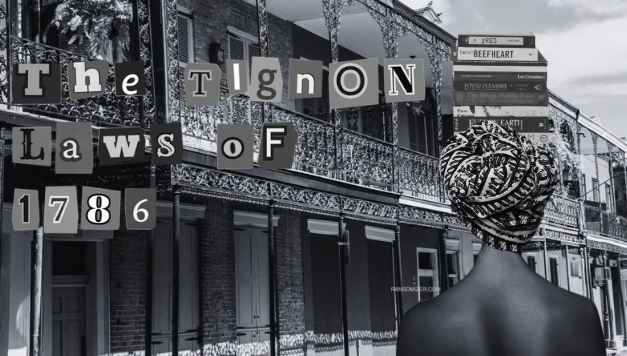
The Tignon Law of 1786 was a law enacted by the Spanish Governor of Louisiana Esteban Rodríguez Miró that required all black women free and enslaved to wear a Tignon (headdress) while out in public and while working to signify that they were of slave class to the whites.

WHy were they established?
The law was passed during a time when creole, mulatto, and women of African descent would adorn their textured hair with gems, beads, and other accents that made them stand out from white women.
It is believed that the white men of that century found themselves increasingly attracted to the exotic looks of women of color and the elaborate hair styles enraged white women
Historian Virginia M. Gould notes that Tignon law would control women “who had become too light skinned or who dressed too elegantly, or who, in reality, competed too freely with white women for status and thus threatened the social order
While, the white elites wanted a clear separation of the fair skinned black women and the rich and elegant black women and the so-called all powerful whites.
This law was directed to all black women living in New Orleans at the time but was especially focused on the creole women.
While there is little evidence that the laws were actively enforced on the people, women of that time did wear the tignons because of it but in their own special ways.
How the Women affected overcame adversity?
Instead of letting the laws dictate how they were seen black women adopted beautiful colored scarves tied in complicated and intricate manners, beginning a distinctive fashion trend that became popular across the globe.
They continued to outshine the white class, simply by being themselves. They continued to do this until the laws slowly dissolved during the early 1803. Although the law had a continued negative effect on the view of black women’s hair and the way they were allowed to express themselves.
The long lasting effects
Aunt Jemima from the baking goods brand created in 1888 wore what is known as a tignon as well. The reasoning was different, Aunt Jemima was started during the Jim Crow Era so giving her the mammy look was purposeful to sell their products.
It was rooted in how bigger corporations saw black women as loyal and subservient, continuing to view them as slaves even after the 13th amendment had been enacted 20 years before . The name “Aunt”and “Uncle” usually given to older enslaved folk since they were denied names like mistress and mister

Marie Laveau (1801–1881)
Commonly known as “the voodoo queen” as a respected free woman of color, hairdresser, and devout Catholic who held immense spiritual and community power. She reigned as a leader in the New Orleans Voodoo community, managing rituals and providing herbal remedies.
She was also known to frequently wear a tignon and would tie seven knots into it (seven being a magical number in voodoo) so that they encircled her head with all the points sticking up, like a crown.
Artists and Civil Rights leaders like Angela Davis, Nina Simon, and Erykah Badu
have also been seen wearing a tignon as a sign of black resistance, challenging the stigma around it and showing confidence in their body and hair.
Head wraps and Afros are two symbols of Black liberation and self-love because our hair contradicts white supremacy through the refusal of Eurocentric features
Key Takeaways
Even while forced to cover their hair, black women have always found a way to overcome adversity. They didn’t let these laws govern how they saw themselves, and it didn’t end there even after the laws had been dissolved, the negative connotation still remained. Figures like Aunt Jemima are an example of these facts, feeding into the terrible mammy stereotype.
Today tignons aren’t required, but there is still a stigma against black women’s hair that they are working everyday to overcome.